The Solemnity of the Most Sacred Heart of Jesus (2026)
One of the strongest images I have of my paternal grandparents’ home in east Tennessee is of a rather large print of the Sacred Heart of Jesus that hung at the far end of their hallway. My grandmother told me that she and Grandpa had received it as a wedding gift in 1946. It had been hanging in the same spot since the early 1950s and, as far as I could tell, it was probably forgotten about as soon as the job of hanging it was finished.
As with so many things in our lives, those that are familiar and comfortable eventually become invisible. I don’t quite know if the old expression, “familiarity breeds contempt,” is always true, but in this case familiarity had bred benign neglect.
For most of us, the church’s annual celebration of the Solemnity of the Sacred Heart of Jesus is like that print in my grandparents’ house. If we are aware of it at all, it is probably little more than a point of nostalgia, a connection with a past that is both comfortable and familiar… but also disconnected from day-to-day life. And yet, the image of the Sacred Heart of Jesus has, over the centuries, become an undeniable part of our Catholic identity. Just like that picture hanging in my grandparents’ hallway, this feast (and the devotions associated with it) tells us something about ourselves and our “family’s” story.
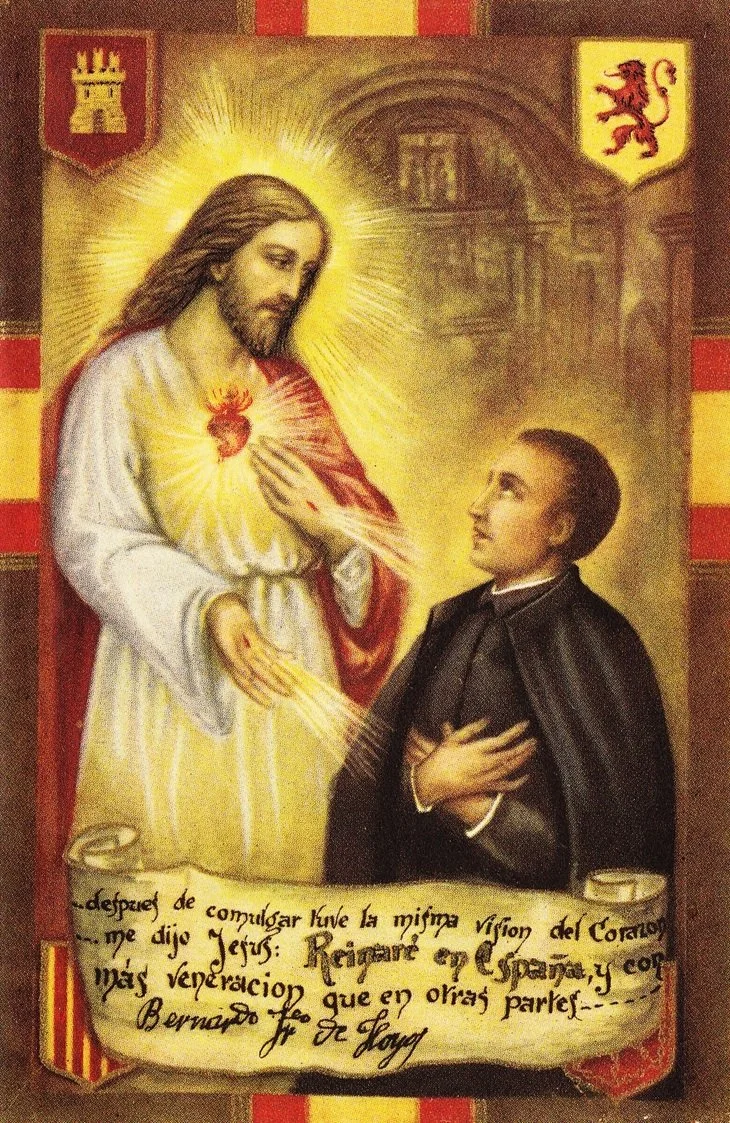
Every age finds its own ways of expressing the truths of faith. And while some of the devotional images associated with the Sacred Heart can strike modern people as overly sentimental, we should be careful not to dismiss the profound theological insight behind them.
Devotion to the Sacred Heart first emerged during the late Middle Ages at a time when Christ was often portrayed primarily as a distant judge or ruler. It was women like Saint Hildegard of Bingen, Saint Mechtilde of Hackeborn, and Saint Gertrude the Great who helped recover a more intimate vision of Christ—one rooted in tenderness, compassion, vulnerability, and love.
Later figures like the Visitation nun Saint Margaret Mary Alacoque and or the Jesuit priest Blessed Bernardo Francisco de Hoyos would help spread devotion to the Sacred Heart more widely throughout the Church. But at its heart, this feast is not really about a particular image or private revelation. It is about the mystery of divine love made human and vulnerable in Jesus of Nazareth.
The reality of this love in Jesus was what drew so many to him during his earthly life. Romano Guardini, a 20th-century theologian, wrote:
The children must have loved coming to Him, otherwise their mothers would never have brought them…. Anyone with whom children like to be, who understands how to get along with them, knows what to say to them; anyone good with children and animals—for He used to love animals too, it showed in the metaphors He used—is a person with the breath of Paradise hovering over him.
The sick came streaming to Him. It reveals a great deal about a man if the suffering press themselves upon Him because they feel they are welcome to do so…. They kept coming to Jesus, from every corner. From the side streets and hovels. From all sides, this dark, embittered army pressed upon Him. He laid His hands upon them, raised them up, touched them, cleansed them, made them whole.
Jesus’ reaction to the nine ungrateful lepers, his weeping over Jerusalem, his grief at the death of Lazarus, his love for Martha and Mary and his reaction to the betrayal by Judas and the fear of the other apostles all reveal the love and vulnerability of Jesus.
In Jesus, God became human and entered fully into the tenderness and vulnerability of human life. And all of this tells us something about God: “God has this individual concern for me, irrespective of my weakness, and irrespective of my shortcomings” (Basil Hume).
Love is always giving of itself; it requires self-sacrifice. This is why the Sacred Heart of Jesus is so often depicted as a heart on fire, burning itself out with love.
The Cross reveals just how far divine love is willing to go.
The mystery of the Sacred Heart reminds us that God does not love from a distance. God’s heart calls to our hearts.
That old picture hanging in my grandparents' hallway may have become easy to overlook. But the mystery it proclaimed remains as true today as it was when my grandparents received it as a wedding gift eighty years ago.
The heart of Christ remains open to us all.
Grant, we pray, almighty God,
that we, who glory in the Heart of your beloved Son
and recall the wonders of his love for us,
may be made worthy to receive
an overflowing measure of grace
from that fount of heavenly gifts.
Through our Lord Jesus Christ, your Son,
who lives and reigns with you in the unity of the Holy Spirit,
one God, for ever and ever. Amen.
-Collect for the Solemnity of the Most Sacred Heart of Jesus
