There are different ways to wait.
Sometimes we wait impatiently for something to be over. We wait for an illness to pass, or for an uncertain situation to be resolved. We can watch the clock, count the days, and just try to get through the time until it arrives.
But there is another kind of waiting that is quite different… think about preparing for a wedding, expecting the birth of a child, or getting ready for Christmas.
That kind of waiting is filled with anticipation.
We make preparations,
we make room for what is coming,
and our lives begin to take shape around something that has not yet happened.
It’s a pregnant kind of waiting, because something new is about to come into being.
This Sunday, the liturgy is reminding us that waiting is also part of our lives as Christians:
We are awaiting the fulfillment of time and of God's promises.
We are awaiting the return of Christ.
And this waiting is not simply about marking time until something happens.
It is about how we live in time.
In these final days of the liturgical year, readings about the end times permeate our worship. They can seem over-the-top or even harsh, especially for those of us who might have had the threat of judgment used as a weapon against us, like a divine holy hammer hovering just above our heads, always ready to strike. But these readings aren’t about fear—they’re meant to help us understand what it means to live with a sense of urgency,
a sense of hope,
and a sense of expectation.
In the First Reading, we heard about a woman whose life is marked by initiative, generosity, and hard work. She’s mindful of what has been entrusted to her and puts her abilities to use. Her concern extends beyond herself and her household to the poor and those in need. She doens’t hold back or wait for someone else to act. Her life bears fruit.
Placed alongside the Parable of the Talents, she stands in sharp contrast to the servant who buried what had been entrusted to him. He was so afraid of failure that he chose not to act. He protected what he had received, but did nothing to make it fruitful.
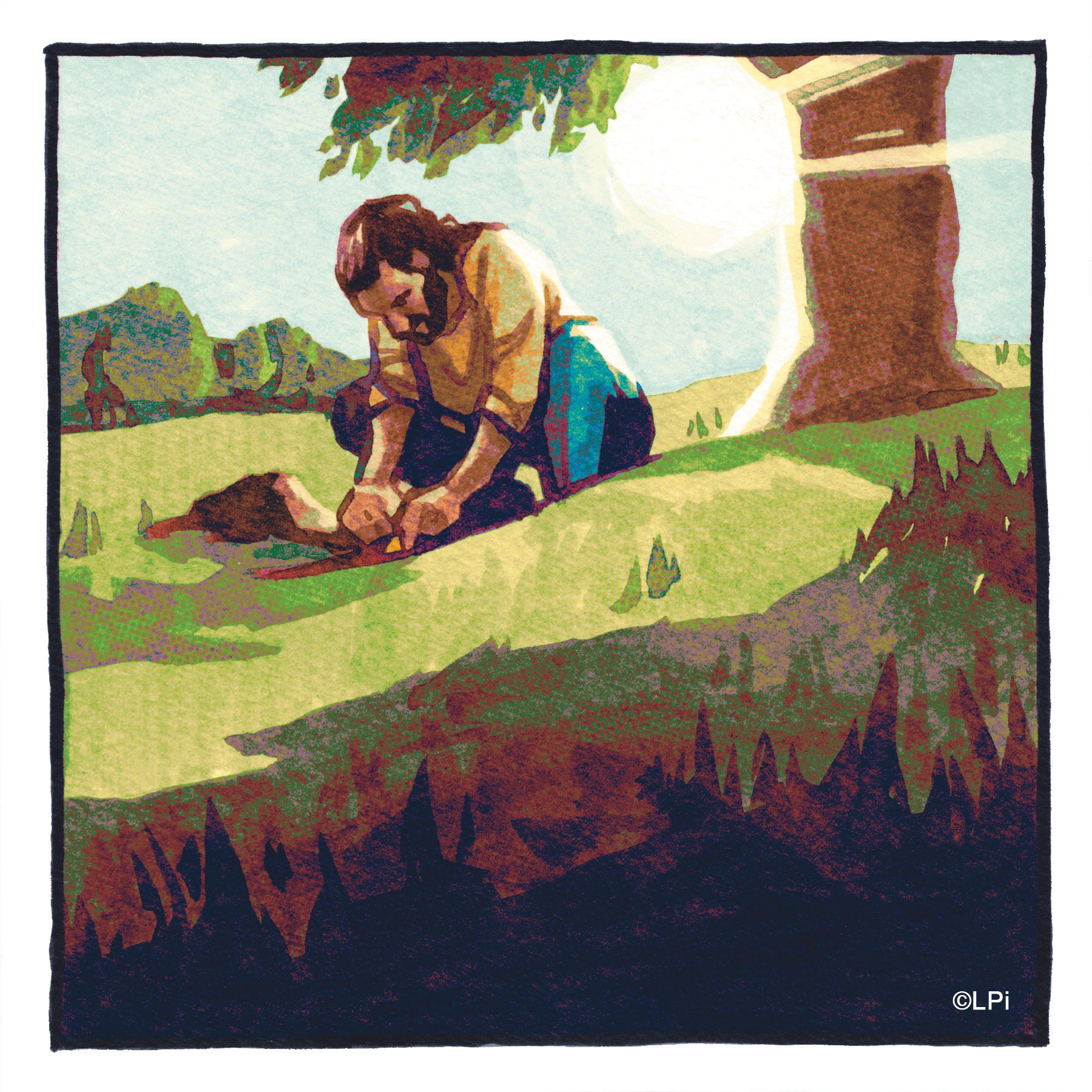
There is more here than just a lesson on how we use our talents or resources. The servant's failure is rooted in his unwillingness to trust. He is so concerned with holding on to what he has that he never allows himself to take a risk.
This is a story about control. But the Gospel is reminding us aren’t called to be in control… we are called to live in the Reign of God.
That requires recognizing the limits of our own abilities, letting go of the need to manage everything ourselves, and making room for God to act.
And that is the kind of trust that faith requires.
The first two servants acted without knowing exactly how things would turn out, and yet they took what had been entrusted to them and put it to work.
This is a reminder that faith isn’t about holding on to what we have received. Faith means allowing God's gifts to take root, to grow, and to bear fruit in the world. Each day is itself a gift, and if we are truly living for the future God has promised, we have an obligation to make the most of today.
Saint Paul reminded the Thessalonians that the Lord will come “like a thief in the night.” We do not know the day or the hour. But that uncertainty doesn’t give us permission to wait passively. Instead, Paul’s words challenge us to live with purpose and urgency. We can’t wait for the coming of God's Reign while ignoring the suffering around us. Working for justice, relieving suffering, and standing with those who are in need are all part of the work entrusted to us as we wait for Christ.
I’m reminded of a distinction that the Danish philosopher and spiritual writer Søren Kierkegaard made about the difference between being an admirer and being a follower. He wrote:
“A follower is or strives to be what they admire. An admirer, however, keeps themself personally detached. They fails to see that what is admired involves a claim upon then, and thus they fail to be or strive to be what they admire” (from Practice in Christianity).
As disciples, we aren’t called to be admire Jesus from a distance. Instead, we’re called to act… to follow him with all of the graces and struggles that entails.
Pope Francis made a similar point when he taught that the expectation of the Lord's return is a time for action… it is a time to bring God's gifts to fruition, not for ourselves, but for God, for the Church, and for others. We never have the option of turning inward and burying our spiritual, intellectual, and material gifts. That’s what the servant did. But our discipleship asks more of us.
It asks us to trust enough to act,
to risk enough to serve,
and to give God room to do what we cannot accomplish on our own.
Saint Paul has reminded us that we are “children of light,” and living in that light means being attentive to the ways God is already at work among us. And while we don’t know when the Lord will come, we do know what we are called to do while we wait. We are called to follow where Christ leads us, to make good use of what has been entrusted to us, and to allow our lives to bear fruit.
That’s what waiting in hope looks like.
So, while we wait, I think each of us would do well to ask: “What will I do with today
Grant us, we pray, O Lord our God,
the constant gladness of being devoted to you,
for it is full and lasting happiness
to serve with constancy
the author of all that is good.
Through our Lord Jesus Christ, your Son,
who lives and reigns with you in the unity of the Holy Spirit,
God, for ever and ever. Amen.
-Collect for the Thirty-Third Sunday in Ordinary Time
Prepared for St. Pius X Parish Community, Wauwatosa, Wisconsin
