The Twenty-Third Sunday in Ordinary Time (2026)
It can be easy for us to look back on the stories found in the Gospels and imagine that those women and men listening to Jesus were ideal disciples, living in perfect harmony with one another.
If we read the Acts of the Apostles and the letters of Saint Paul, however, we quickly realize that this idyllic community was never a reality. From the earliest days, the Church experienced divisions, disagreements, and dis-ease as believers tried to figure out how to live out the teachings of Jesus together.
In fact, many of the difficulties we experience in our parishes or families today are the same sorts of challenges faced by those first generations of Christians. That is worth remembering as we continue to hear the Gospel of Matthew throughout this liturgical year.
Matthew's Gospel was written several decades after the death and Resurrection of Jesus. By then, the Christian community had already experienced enough of life together to discover that following Jesus did not mean that Christians would stop hurting one another, disagreeing with one another, or failing one another. Matthew's community knew something about the challenges of discipleship.
And so, when Jesus speaks in today's Gospel about what happens when one member of the community sins against another, he isn't describing some ideal community in which conflict never happens. He is speaking to people who already know that relationships can become complicated.
Jesus begins with something surprisingly simple: go and talk to the person. When it is possible and safe to do so, Jesus calls us to speak honestly with the person who has hurt us.
And so, if someone has hurt us, our first instinct is often to do almost anything except that.
We avoid the person.
We tell someone else what happened.
We replay the conversation in our minds.
We wait for the other person to realize what they did.
Sometimes we tell ourselves that we are simply “giving it time,” when what we are really doing is allowing a wound to become a permanent part of the relationship.
Jesus offers another way: He tells us to go to the person who has hurt us and speak honestly.
That requires courage. It requires humility. And it requires us to remember that the purpose of the conversation is not to win an argument or prove that we are right. The purpose is reconciliation.
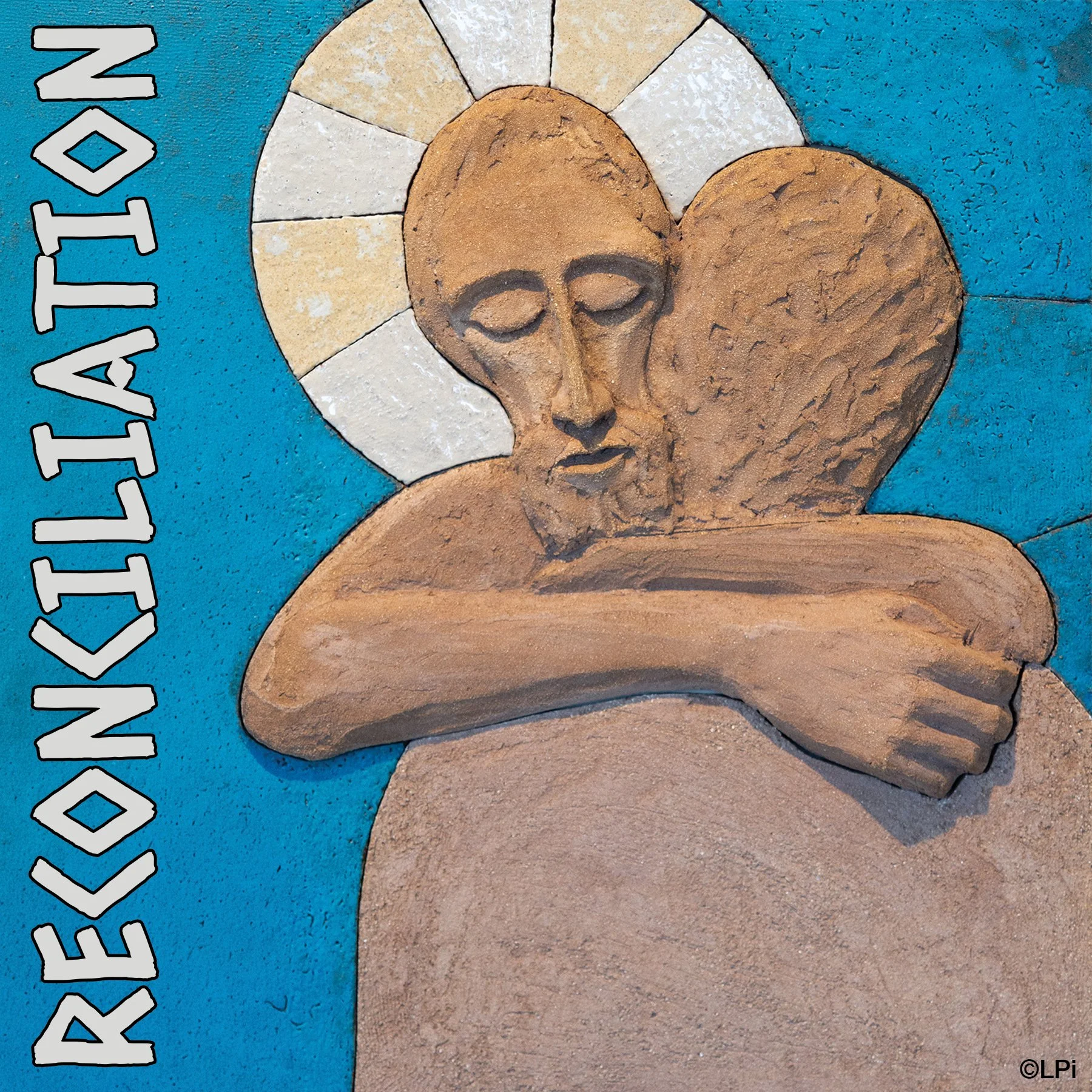
And reconciliation is not the same thing as avoidance.
Sometimes we mistake silence for peace. We stop talking about what happened, and because the conflict is no longer visible, we convince ourselves that everything is fine. But a relationship can look peaceful on the surface while a wound continues to grow underneath.
Jesus does not seem particularly interested in that kind of peace. Instead, he calls his disciples to do the harder work of speaking honestly and seeking healing.
But that does not mean that reconciliation always restores a relationship to exactly what it was before. There are times when the healthiest and most faithful response is to establish a firm boundary, or even to end a relationship that has become destructive or unsafe. Forgiveness does not require us to place ourselves back into situations that are destructive or unsafe. We can forgive someone and still recognize that the relationship needs to change.
The goal is not to pretend that nothing happened.
The goal is healing—even when healing takes a form different from what we first imagined.
And that is why Jesus gives the community a role in this process. If one conversation doesn't bring healing, he says, involve one or two others. If necessary, involve the wider community.
The problem of one broken relationship can affect the whole body. Our relationships with one another matter because we belong to one another.
Those are not easy things.
Sometimes the work of mercy is saying something difficult to someone we love.
Sometimes it is listening when we would rather defend ourselves.
Sometimes it is admitting that we have caused the wound.
Sometimes it is forgiving someone who has never apologized.
But through all of this, Jesus asks us to resist the temptation to write one another off.
At the end of the Gospel, Jesus says that if the person refuses even the efforts of the community, we should treat that person as “a Gentile or a tax collector.” That might sound like permission to dismiss someone. But Matthew's Gospel won't allow us to hear it that way.
Who were the Gentiles and tax collectors in Jesus' ministry? They were precisely the people Jesus continued to seek out.
He ate with tax collectors. He responded to the faith of Gentiles. He crossed boundaries that others believed should never be crossed. So even when reconciliation fails, we can establish boundaries without hatred.
We can accept that a relationship has changed without deciding that the person no longer matters as a daughter or son of God.
We can forgive without forgetting.
And we can continue to hope for healing without pretending that we control how or when it will happen.
Ultimately, the message here is that we never have the right to write anyone off. And it’s important that we hear this Gospel proclaimed in the context of our celebration of the Eucharist.
At the beginning of every Mass, we take a few moments to acknowledge our sins and ask for forgiveness. We do this not as individuals who have somehow gotten everything right, but as a community of people who know that we need mercy.
We come to this altar carrying our relationships with us—the ones that are healthy, the ones that are strained, the ones that have been wounded, and even the ones that have ended. And the Gospel asks us to consider where reconciliation is being asked of us.
Whom have I hurt?
Whom do I need to forgive?
Where have I confused avoidance with peace?
Where might I need to speak the truth?
And where might I need to establish a boundary while still refusing to let anger or resentment define how we see another person?
The God who calls us to this table is the God who continually reconciles us to himself and to one another.
And so, as we continue our journey through Ordinary Time, today's Gospel invites us to take seriously the quality of our relationships—not because Christians are expected to live without conflict, but because Christ asks us to become people who seek healing, practice mercy, and refuse to write one another off.
O God, by whom we are redeemed and receive adoption,
look graciously upon your beloved sons and daughters,
that those who believe in Christ
may receive true freedom
and an everlasting inheritance.
Through our Lord Jesus Christ, your Son,
who lives and reigns with you in the unity of the Holy Spirit,
God, for ever and ever. Amen.
-Collect for the 23rd Sunday in Ordinary Time
Prepared for St Pius X Parish Community in Wauwatosa, Wisconsin
