The Twenty-Fifth Sunday in Ordinary Time (2026)
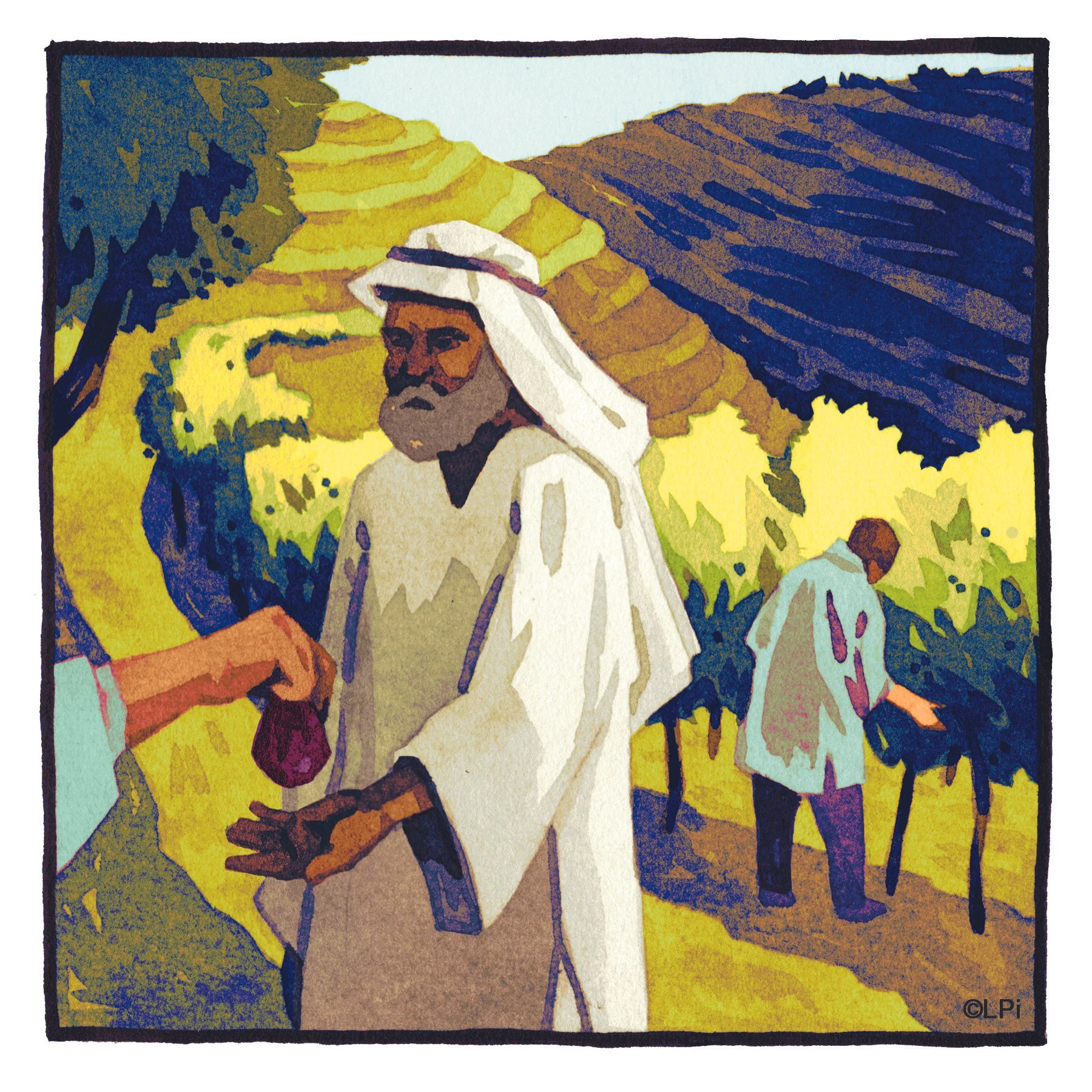
In parts of the United States, it isn’t uncommon to see groups of men and women standing in parking lots of hardware and home improvement stores like Home Depot and Menard’s. I never gave them much thought until a friend explained who they were: day laborers hoping that a contractor or someone needing help with a home repair project would hire them for the day or, at the least, for a few hours.
These people are continuing a tradition that is found in nearly every culture and, as we see in this Sunday’s Gospel, was certainly common in Jesus’ day.
In a recent conversation with another Salvatorian who had worked in Arizona and as a missionary in rural parishes and mission stations in Mexico, he shared with me that he often had opportunities to talk with these laborers. One man told him how heartbreaking it was to return home at the end of the day without having been hired, knowing that he had no money to buy food for his family or pay their bills.
It is a way of life that few of us will never know. And yet it gives us an important perspective for understanding the Gospel.
When we hear that the landowner paid all of the workers the same wage, we can easily become focused on the question of fairness. The workers who had been there since early morning certainly did. They had worked through the heat of the day, and they were understandably upset when those who had worked only one hour received the same daily wage.
But notice something that Jesus tells us about the workers who were still standing in the marketplace at the end of the day.
When the landowner asked them why they have been standing there all day, they answer, “Because no one has hired us.”
We might be tempted to imagine that they were simply lazy or unwilling to work. But Jesus gives us another possibility: they were waiting for someone to give them an opportunity to provide for themselves and their families.
And so, when we understand what the landowner is doing, we see that generosity in a very different light.
He is not simply rewarding people for the amount of work they have done. He is making sure that every person has what they need.
That’s a challenge… Because even when we can understand the generosity of the landowner, there is something in us that still wants to say, But that isn't fair.
We know that feeling.
We can experience it when someone receives an opportunity we believe we deserved.
We can feel it when seems someone who has not worked as hard as we have receives the same recognition.
We can feel it when someone who has made mistakes seems to receive forgiveness more easily than we have.
We can even experience it in our understanding of God.
How many of us struggle with the idea of a deathbed conversion? How many of us find ourselves wondering about someone who has lived most of their life far from God and then, at the end, suddenly turns toward him?
We can be grateful that God is merciful—and still find ourselves thinking, What about all the years I have given?
That is the resentment at the heart of the parable.
And this is why Jesus tells the story in the first place. The parable isn't about wages. It is about the generosity of God and our willingness to rejoice when that generosity is given to someone else.
We see something similar in the Parable of the Prodigal Son. The older brother has remained faithful. He has worked. He has obeyed. And when his younger brother returns home after wasting everything, the father welcomes him with celebration. The older brother's response should feel familiar: Look at everything I have done. What about me?
It is possible to be faithful and still become resentful.
It is possible to spend years working in the vineyard and lose sight of the generosity that invited us there in the first place.
That is why the First Reading from Isaiah is so important. “My thoughts are not your thoughts, nor are your ways my ways, says the LORD.” We want to measure, compare, calculate, and determine what people deserve. God sees something larger.
God's justice is not simply a matter of keeping score.
God's generosity is not limited by our calculations of who has earned what.
And this is where the parable becomes personal.
Where do we find ourselves resenting the good fortune of another person?
Whose blessing is difficult for us to celebrate?
Where have we started keeping score—of what we have given, what we have sacrificed, what we have endured?
Jesus asks us to examine what happens in our own hearts when God's generosity is extended to someone else Because resentment can quietly rob us of gratitude.
The laborers who arrived early had already received something extraordinary: they had been given work. They had been invited into the vineyard. They had the opportunity to participate in the work of the landowner. And yet, by the end of the day, they could no longer see the gift they had received because they were looking at what someone else had been given.
The invitation of this Gospel is to become people who can receive God's generosity without needing to measure it against what someone else receives.
God's mercy is not a limited resource.
There is enough grace for the person who has served God faithfully for a lifetime and enough grace for the person who turns toward God at the last hour.
There is enough grace for us—and enough grace for the person whose life, choices, or circumstances we may find difficult to understand.
The parable summons us to believe that God's mercy and goodness do not exist at the expense of justice. They invite us to move beyond our own calculations of merit and reward.
God's ways are not our ways… and the work of the disciple is learning to rejoice that this is true.
O God, who founded all the commands of your sacred Law
upon love of you and of our neighbor,
grant that, by keeping your precepts,
we may merit to attain eternal life.
Through our Lord Jesus Christ, your Son,
who lives and reigns with you in the unity of the Holy Spirit,
God, for ever and ever. Amen.
-Collect for the Twenty-Fifth Sunday in Ordinary Time
Homily prepared for St. Pius X Parish Community in Wauwatosa, Wisconsin
