Fourth Sunday of Ordinary Time (2026)
I imagine that for the people listening to Jesus on the mountain that day, hearing him describe the poor in spirit, those who suffer and mourn, as being “blessed” it might have seemed as though the world had turned upside down. What Jesus is saying defies the logic that guides so much in our world and his teachings go against the hopes that many had that he would be a new kind of king who would restore the fortunes and freedom of Israel. But that isn’t who Jesus was.
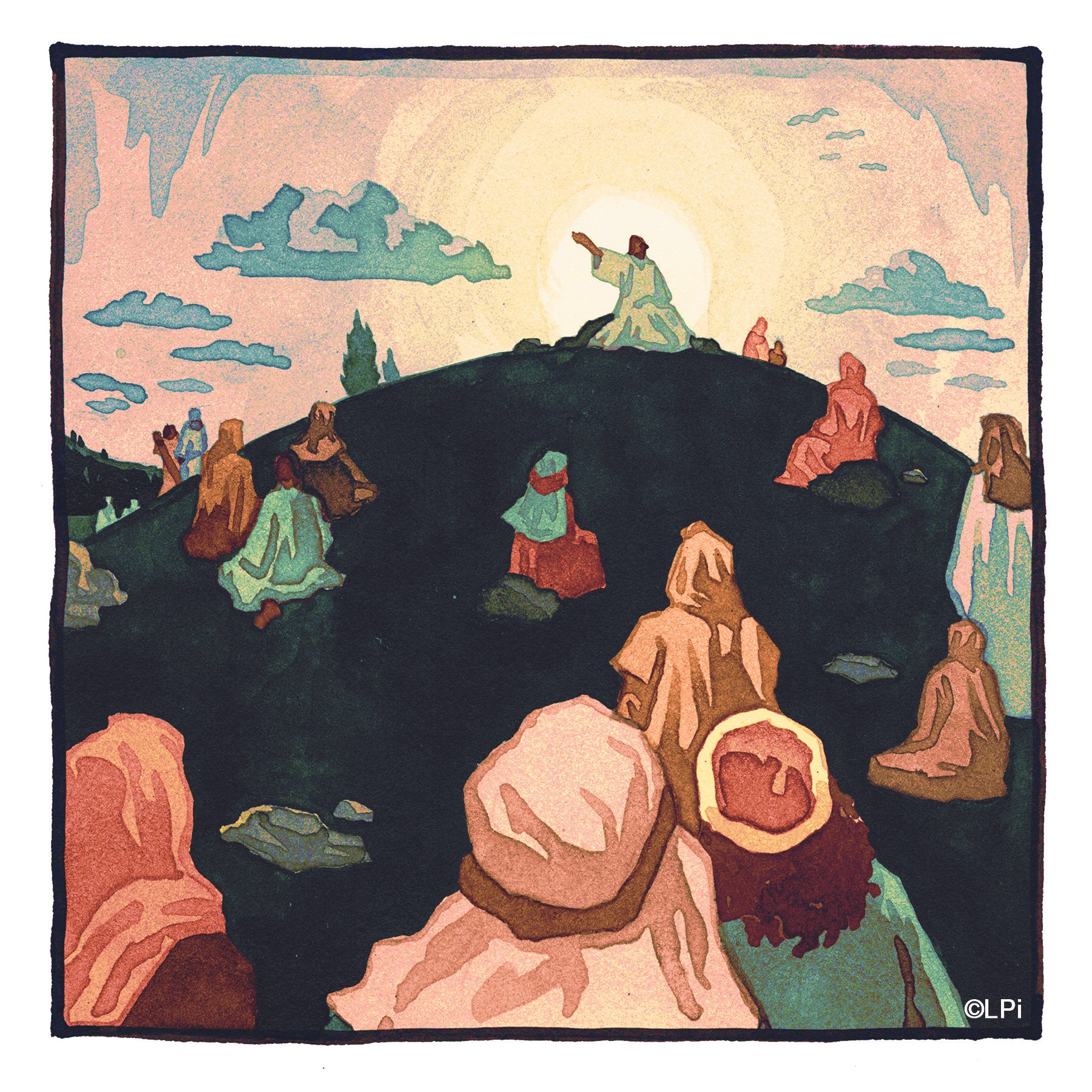
In his teachings, Jesus never promises rewards for his followers here and now. Instead, he’s looking toward the fullness of life in the God’s Kingdom. And the blessings of the Beatitudes that we heard in the Gospel transport us to the fullness of life in the Reign of God. But the qualities of discipleship outlined in the blessings are very much concerned with how we live our lives in this present moment.
Let’s think about the present moment…
These are hard days—locally and across the country—as we face so much tension, division, partisan pandering, and very real human suffering. That’s why it’s essential that each of us takes time to reflect on how we are living out our commitments as followers of Jesus and the Beatitudes offer a beautiful opportunity for us to ask ourselves some challenging questions. But, we can also reflect on how similar our current situation is to that of Jesus’ first followers. Like them, we also live in days of uncertainty, haunted by threats of violence and by fear. The Beatitudes promise that what we experience today will lead to future joy, even as they demand something of us.
To follow Jesus does not mean merely traveling with him from place to place. It means that we have to be willing to learn from him, that we follow his manner of life and way of thinking. It means that we have to be willing to listen what he is saying and to seek answers when we don’t understand. All of this means that we have to be willing to live as learners.
And in order for us to be good learners, we have to humble, willing, and open to be taught. This is the same mindset Zephaniah described in the First Reading as he spoke of a humble and lowly remnant. This is also what we hear from Saint Paul in the Second Reading as he proclaimed that God chooses the nobodies of this world to shame those who think they are somebody.
And so, what is the curriculum that Jesus is offering to us?
Well, the first lessons that we have to learn are found in the Beatitudes.
And in order for these lessons to really take root within us, we have to be willing to look honestly into our hearts and minds to discover how we manage the goods of this world. Do we hoard them? Do we use them as leverage against others? In other words, how can we learn the lessons of poverty and meekness?
Suffering is a very real part of life. How do we react to it? And do we suffer for the right reasons? Do we grieve because we are living with petty disappointments or feeling sorry for ourselves or because we long for a world of justice and peace? How can we learn the lessons that suffering has to teach us?
As followers of Jesus our inner dispositions must be patterned after the One whom we say we follow.
We are taught to forgive those who have wronged us, whether those are family members, neighbors, coworkers, or members of other ethnic groups, cultures, or nations. We are taught to be single-minded and honest in our dealings with others, whoever they may be. We are taught to work for peace rather than revenge, always keeping in mind that in order for it to be a real peace, it has to be a true desire for righteousness—for right relationships—and that is something that can cost us.
The beatitudes outline the kind of person we should be as disciples. This is important, because disciples don’t merely follow Jesus; they also continue the work he began. And the work that Jesus took on himself was the creating and life-giving work of God. So, as one spiritual writer describes it: “First God, then Jesus, and then the disciples work to secure justice for the oppressed, give food the hungry, give sight to the blind, protect strangers, sustain the fatherless and the widowed” (Diane Bergant, Preaching the New Lectionary) All those works of God are named in the Responsorial Psalm proclaimed this Sunday.
In whatever circumstances of life we find ourselves, as disciples of Jesus we work to sustain the good that is in the world and to transform whatever needs transformation. And so, rather than showing us a world turned upside down, Jesus is telling us what it means to be part a world that is right side up.
Grant us, Lord our God,
that we may honor you with all our mind,
and love everyone in truth of heart.
Through our Lord Jesus Christ, your Son,
who lives and reigns with you in the unity of the Holy Spirit,
God, for ever and ever. Amen.
-Collect for the Fourth Sunday in Ordinary Time
Homily prepared for Old St. Mary’s Church in Milwaukee, Wisconsin
