The Sixteenth Sunday in Ordinary Time (2026)
In a collection of essays on the Church Year that I read some time ago there is a story told by Father Ken Tesing, a Maryknoll priest who spent many years serving in East Africa.
After returning to the United States, he was visiting his brother's farm. As they were walking through the fields, His brother pointed to some unfamiliar weeds and asked if he recognized them.
"No," Father Tesing replied. "I've never seen those before. How did they get into your fields?"
His brother explained that years earlier new herbicides had eliminated the weeds they had battled when they were growing up. But once those weeds disappeared, other seeds that had been lying dormant beneath the soil suddenly began to sprout.
Then he added something Father Tesing never forgot: "Farming is like life,” going on to reflect that there will always be challenges. There will always be things we didn't expect. The question is not whether weeds will appear, but how we will live with them.
That simple observation helps us enter into today's Gospel.
Now, at first glance, this parable seems to be about wheat and weeds. A farmer sows good seed, an enemy sows weeds among the wheat, and both are allowed to grow together until the harvest.
But the real focus of the story is not the weeds. It is the landowner.
And notice what Jesus does not spend time explaining: he doesn't tell us why the enemy sowed the weeds. He doesn't describe how the servants eventually separated the harvest. Instead, he focuses our attention on the surprising response of the landowner.
When the servants ask whether they should pull up the weeds immediately, the landowner refuses. "No," he says, "if you pull up the weeds you might uproot the wheat along with them. Let them grow together until harvest."
That seems almost reckless. And it becomes even more surprising when we realize that the "weeds" Jesus mentions weren’t just any weeds.
The Greek word is zizania and it describes a kind of ryegrass, which is a plant that looks remarkably like wheat while it is growing. In its early stages, it is almost impossible to tell the difference. Only as the plants mature does the distinction become clear.
And that helps the landowner's patience begin to make sense. Because he knows that acting too quickly could destroy the very wheat he hopes to save.
That is the mystery Jesus is revealing about the Kingdom of Heaven.
The parable is not telling us that evil doesn't matter.
Nor is it asking us to pretend that weeds don't exist.
It is revealing something about God: God is never in a hurry to give up on people. That same truth is echoed beautifully in today's First Reading from the Book of Wisdom:
“Though you are master of might, you judge with clemency... You taught your people that those who are just must be kind... and you gave your children good ground for hope that you would permit repentance for their sins.”
Notice how God's power is revealed.
Not through force.
Not through impatience.
But through mercy.
And God's mercy is not weakness. It is patient love that creates room for conversion.
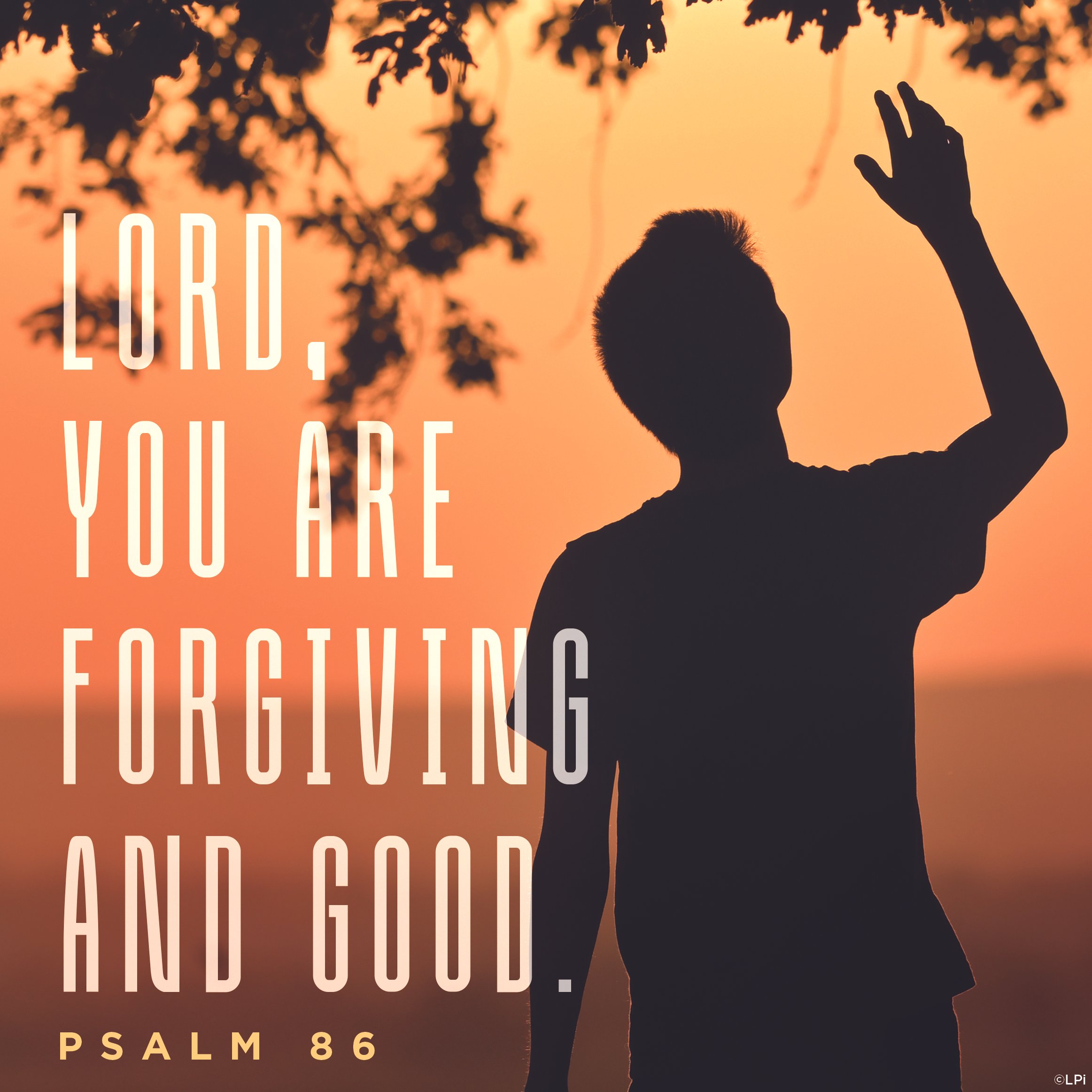
But mercy can be difficult for us, especially in our overly politicized times. Compassion is sometimes dismissed as weakness or as simply letting someone "off the hook." We see this in debates about immigration, assistance for low-income families, addiction, mental illness, and so many other questions involving people who do not fit comfortably within our political, economic, or even theological worldviews.
But the mercy revealed in today's readings is not about pretending that choices do not have consequences or that evil does not matter. Mercy refuses to believe that the story of another person's life is already finished. It leaves room for grace. It leaves room for conversion. It leaves room for God to accomplish what only God can see.
I think that changes the way we hear this parable. Because our instinct is often to separate the wheat from the weeds as quickly as possible.
We do it in our families.
In our communities.
In the Church.
And, if we're honest, we even do it within ourselves.
We become impatient with the weaknesses we see in others. We become discouraged by the weaknesses we see in ourselves. But Jesus invites us to trust that God's patience is greater than our impatience.
This reminds me of a remarkable observation that Saint Augustine once made about this parable: Unlike real wheat and real weeds, people can change. And, in the Lord’s field, which is the Church, what is wheat today may become weeds tomorrow. And what is a weed today may, by the grace of God, become wheat. And we don’t know what tomorrow will bring.
The story is not over. That is why the landowner waits.
Because mercy gives time.
Mercy gives space. Mercy gives hope.
God never ceases to work quietly within the human heart, bringing about a harvest that only God can fully see. That is the invitation this Gospel places before us today:
Rather than asking, "Who are the weeds?" perhaps we should ask: Where is God patiently at work?
Where is God inviting me to trust his grace rather than my own judgments?
Where am I being asked to show the same patience toward others that God has so generously shown to me?
The Kingdom of Heaven grows quietly. Often imperceptibly—Like wheat in a field. And the Lord of the harvest is never in a hurry.
He knows what he has planted.
He knows what his grace can accomplish.
And the Lord never gives up on the harvest he has begun.
Show favor, O Lord, to your servants
and mercifully increase the gifts of your grace,
that, made fervent in hope, faith and charity,
they may be ever watchful in keeping your commands.
Through our Lord Jesus Christ, your Son,
who lives and reigns with you in the unity of the Holy Spirit,
God, for ever and ever. Amen.
-Collect for the Sixteenth Sunday in Ordinary Time
