The Fifteenth Sunday In Ordinary Time (2026)
Some of the stories that Jesus tells have become so familiar that we can almost finish them before they begin.
This Sunday's Gospel is one of those stories.
"A sower went out to sow..."
We've heard it countless times. We know about the seed that falls on the path, among the rocks, among the thorns, and into rich soil. We know that the seed is the Word of God and that the different kinds of soil represent the human heart.
Because we know the story so well, we can easily miss what is most striking about it.
The sower simply keeps sowing.
He doesn't wait until the soil is perfect.
He doesn't scatter seed only where he is guaranteed a harvest.
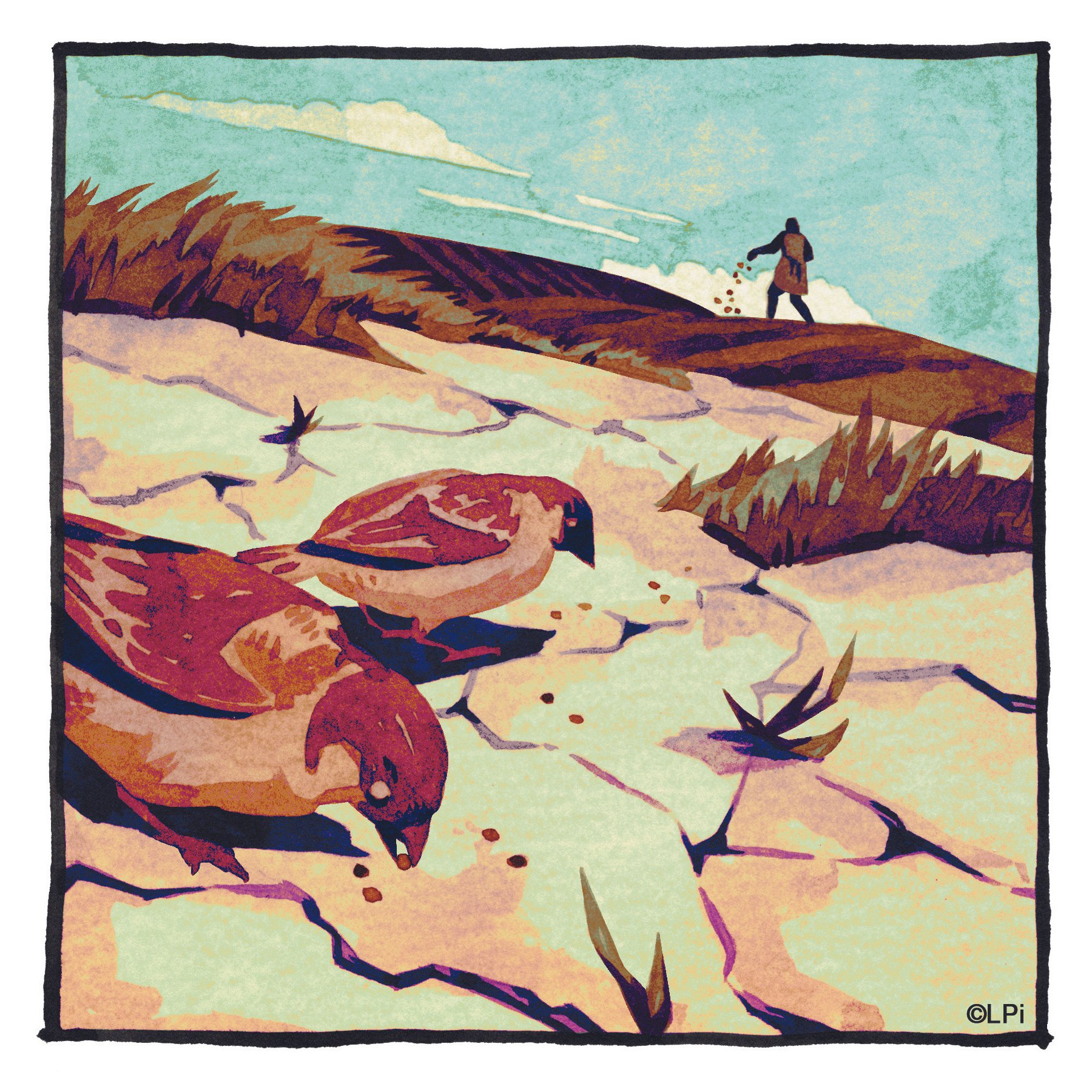
He sows generously—even extravagantly.
Any farmer listening to Jesus would have noticed how ridiculous this was. Seed was precious. It represented time, labor, and hope. No careful farmer would intentionally scatter seed on a hard-packed path, among rocks, or into thorn bushes. It seems almost wasteful. And yet that is exactly what the sower does. He sows with astonishing generosity, unconcerned about calculating where the greatest return will come. That is because this is more than a story about farming.
It is a story about the heart of God.
That image becomes even more beautiful when we hear it alongside the words of the prophet Isaiah in today's First Reading:
“Just as from the heavens the rain and snow come down and do not return there till they have watered the earth... so shall my word be that goes forth from my mouth. My word shall not return to me void, but shall do my will, achieving the end for which I sent it.”
Isaiah reminds us that God's Word is never spoken in vain. Every word God speaks carries within it the power to accomplish what God desires. That doesn't mean every seed sprouts immediately. Some seeds remain hidden beneath the surface for a long time before new life begins to appear.
God's work is often hidden before it is visible. But hidden does not mean absent.
God is always speaking.
God is always sowing.
Sometimes God speaks through the Scriptures. Sometimes through the quiet prompting of conscience. Sometimes through the kindness of another person, through beauty, through suffering, or through moments we only understand years later. God's grace is never absent from our lives. More often, we simply fail to recognize how quietly and patiently God has been at work all along.
Whether we are ready, paying attention, or even aware of it, God continues to scatter the seed of the Word with remarkable generosity. This is simply who God is.
That truth should change the way we hear this parable.
And so, the question is not whether we recognize how God has been at work in our lives, sowing the seeds of grace long before we ever thought to look for him.
The generosity of the Sower is only half the story.
The other half is our response:
The soil matters.
Now, as we heard, the condition of the soil doesn't determine whether the sower will sow. He scatters the seed everywhere. But it does determine what becomes of the gift that has been given. Jesus isn't telling us that we have to earn God's grace. He's inviting us to receive it so fully that it can accomplish within us what God desires.
That is good news. If Jesus were simply describing different kinds of people, this parable would leave little room for hope. But Jesus is describing hearts, and hearts can change. What is hardened can be broken open. What is cluttered can be cleared away. What has become neglected can be tended again. God's grace never stops working within us, inviting us to become more receptive to the gift of the Word.
That is the hope in this story.
And, when we think about what we're doing in this celebration, we begin to see that this is what Ordinary Time is all about.
The great seasons of Advent, Christmas, Lent, and Easter immerse us in the saving mysteries of Christ. Ordinary Time is when we farm our hearts, allowing those mysteries to grow within us and give shape to our lives. Through prayer, the sacraments, works of charity, and the ordinary practice of discipleship, we gradually become the people God is calling us to be.
But that doesn't happen all at once. It happens as we learn to listen more attentively to the voice of the Sower, who never stops speaking his Word into our lives.
Perhaps one simple way to pray with this Gospel during the coming week is to ask: Where is God inviting me?
How am I being invited to love God in this season?
How am I being invited to love my neighbor?
How am I being invited to love myself?
Those are the questions that slowly prepare the soil of the heart.
And the beautiful thing about this parable is that Jesus never tells us to become the sower.
God has already taken care of that.
Our task is to become good soil.
To trust that God is still speaking.
To believe that the seed is still being scattered.
And to allow that Word to take such deep root within us that our lives, too, become a harvest given for the life of the world. Because the God who never stops sowing never stops believing that our lives can bear fruit.
O God, who show the light of your truth
to those who go astray,
so that they may return to the right path,
give all who for the faith they profess
are accounted Christians
the grace to reject whatever is contrary to the name of Christ
and to strive after all that does it honor.
Through our Lord Jesus Christ, your Son,
who lives and reigns with you in the unity of the Holy Spirit,
God, for ever and ever. Amen.
-Collect for the Fifteenth Sunday in Ordinary Time
Prepared for St. Pius X Parish in Wauwatosa, Wisconsin
